
Beyond the Breath: The Chemistry of Alcohol Detection

"Officer. I swear I've only had one drink."
That line? It's iconic. Uttered by countless hopefuls across generations. Often followed by the equally classic, "But it was only a small glass!"
Maybe for a while, those excuses even sound convincing. With a charming smile, convincing words, and perhaps a sad breakup story too, it's easy to make it believable. Sadly, other people can fall for your bluff, but not the Breathalyser :)
See, the Breathalyser isn't interested in your dazzling wit. It's a no-nonsense, strictly science kind of machine. Its verdict isn't swayed by charm, creative excuses, or even a break-up. It listens only to chemistry. And chemistry, my friend, has a brutally honest way of calling bluffs. It judges your breath, not your intentions. So, buckle up as we take a closer look at the chemistry behind breathalysers.
The Journey of Alcohol
When you consume an alcoholic drink, the ethanol is quickly absorbed into your bloodstream. From there, it circulates throughout your entire body, reaching every organ, including your lungs. Because ethanol is a volatile compound, a measurable portion of it transitions from your blood into the air sacs within your lungs. So, with every breath you exhale, you're releasing not just air, but also alcohol molecules. This is the fundamental principle that breath testing relies upon.
How Early Breathalyzers Spilled the Beans
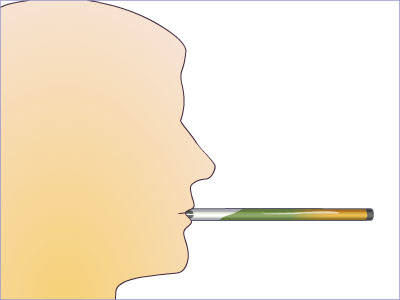
Earlier, the first generation of breathalysers operated on a surprisingly visual chemical reaction. They used acidified Potassium dichromate, a vibrant orange solution, as their detective.
Here's how they detected the tipsy
The Exhale: You provide a breath. sample into the device.
The Mix: Any ethanol in your breath comes into contact with the orange dichromate solution.
The Reaction: If alcohol is present, a chemical reaction begins. The ethanol is oxidised into acetic acid, while the orange dichromate ions are simultaneously reduced into striking green chromium (III) ions.
The Verdict: The degree of colour change from orange to green directly indicated the amount of alcohol in your breath. A stronger green meant more ethanol. It was a clear, unambiguous chemical signal that left little room for doubt.
The Fuel Cell Revolution
Fast forward to the present, and modern breathalysers have become incredibly precise, largely due to fuel cell sensors. These devices offer a more sophisticated and accurate way to quantify alcohol.

Here's how it works-
1. Targeted Oxidation: When your breath sample enters the fuel cell, ethanol molecules encounter an electrode surface.
2. Electron Generation: At this surface, the ethanol undergoes oxidation, releasing electrons in a controlled electrical current.
3. Signal to BAC: The number of electrons generated is directly proportional to the amount of alcohol present. This tiny electrical current is then precisely measured and converted into the Blood Alcohol Concentration (BAC) reading displayed on the screen. It's a rapid, highly accurate, and objective measurement.
Why Your Breath is a Snitch
So, how does a puff of air manage to spill all your secrets about what's swirling in your veins? It's all thanks to a crucial scientific principle named Henry's Law. This law dictates that the concentration of alcohol in your blood and the concentration of alcohol hanging out in the air in your lungs are in a constant state.
This means that by simply measuring the alcohol present in your breath, authorities can accurately infer the concentration of alcohol circulating in your blood. Yeah, Henry's the main culprit here, the guy who refuses to let you drink and drive by making your breath a perfectly reliable witness. He's not letting you get away with anything!

The bottom line
From the earliest colour-changing tubes to today's advanced fuel cell technology, breathalysers stand as a testament to the power of chemistry. They eliminate guesswork and anecdotal evidence, providing a cold, hard number based on scientific principles. So, whether it's a "small glass" or "just one drink," the breathalyser, guided by the immutable laws of chemistry, will always have the final, honest say. So better not to drink and drive, rather don't just drink. :)
-By Kirtan (S.Y BPHARM)


Comments